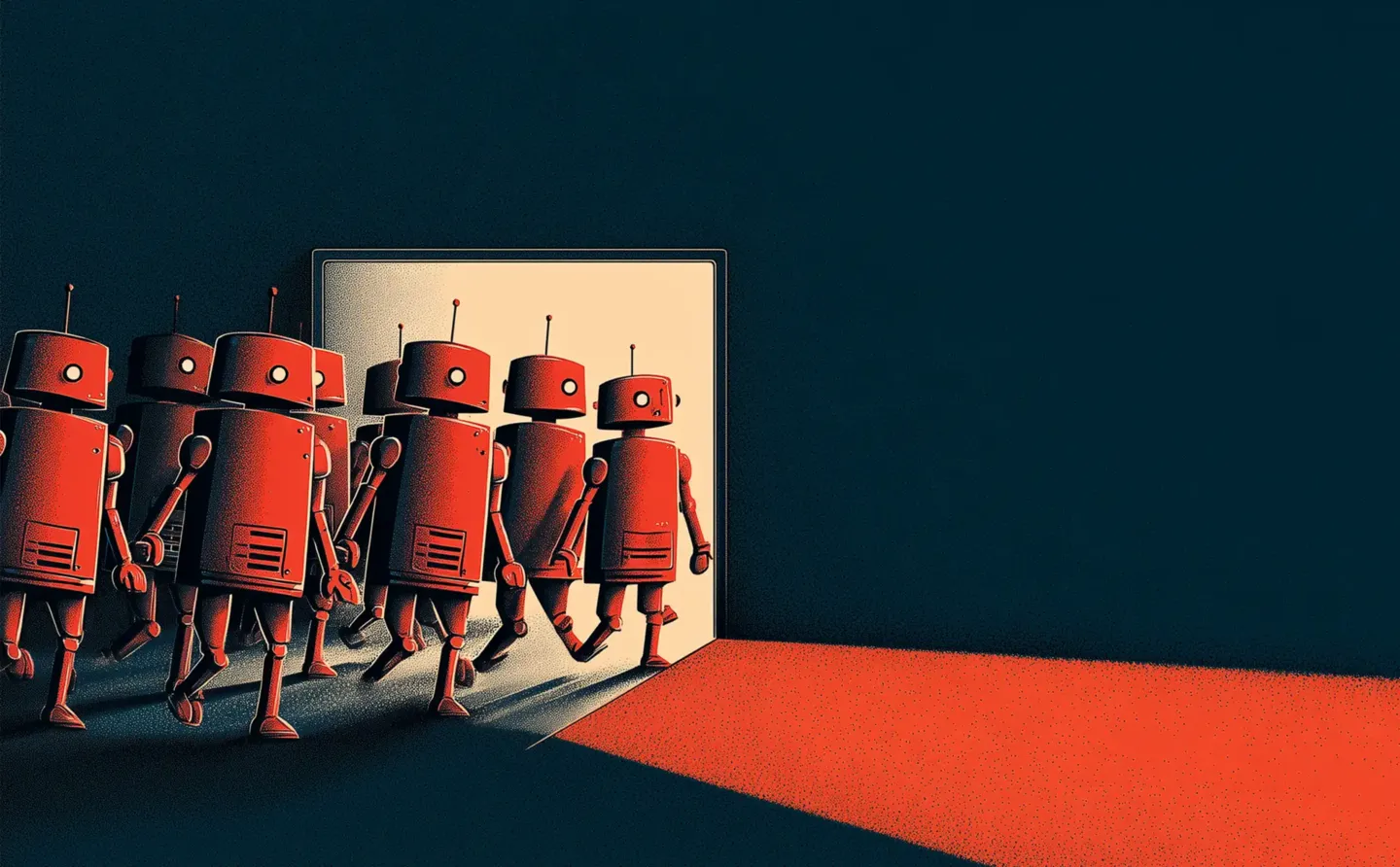
Well, here we are, with the illusion of choice.
You woke up one day after an update, and your toolbar looked different.
You most likely didn't ask for it. You probably didn't vote on it. Nobody sent a survey asking if you wanted a robot to finish your sentences or extend your backgrounds.
It just appeared.
Everywhere.
Relentless.
The narrative around Artificial Intelligence suggests we are all eager early adopters rushing to try the new thing. But looking at the tools we use daily tells a different story. We were never given a choice.
The Software Takeover
As designers, we live within a specific ecosystem of tools. When those tools change, your workflow changes. Sometimes it’s a minor frustration, other times it’s really jarring. Overall, you really had no say in the matter, except for possibly complaining on forums that generally become a black hole of apologist bullshit replies from “community” reps that undoubtedly result in… you guessed it… nothing.
Take a look at the industry-standard software that we as users engage with every day:
Adobe Photoshop: The introduction of "Generative Fill" wasn't a downloadable plugin you could choose to ignore. It took center stage in the UI. The Contextual Task Bar now floats over your canvas, begging you to let Firefly generate pixels for you. I have a lot more to say about Adobe and their all-out, bloody war on creatives… but I’ll hold that over for a later time. But Adobe in particular is absolutely “building the plane mid-flight”, and it’s total bullshit.
Figma: They launched AI features designed to "rename layers" and "generate designs." While they paused some features due to backlash, the intent is clear. They want AI between you and the canvas.
This is an older article, but really solid. Stop acting like you didn’t know, Figma.
Canva: The "Magic Studio" isn't a side feature. It is the core selling point now. They push it at every step of the creation process. Also, they banged you HARD on pricing.
You cannot simply use the software you paid for five years ago. Subscription models ensure you are always on the latest version.
Choice?
Gone.
Oh, and the latest version always includes AI.
The Stock Photo Flood
The illusion of choice is even more aggressive in resource libraries.
Go to Adobe Stock or Shutterstock right now. Search for "business meeting" or "sunset over ocean." You will see thousands of results. A massive chunk of them are fake - like, really, really fake. Stock sites prioritize volume over reality. AI images are cheap to produce and flood the search results. You often have to actively find the "exclude AI" filter to see real photography. The default setting is artificial. The human element is now a setting you have to toggle on in many cases.
Profit Over Ethics and Quality
Why did this happen so fast?
Companies are terrified of being left behind. They saw the speed of OpenAI and Midjourney. They panicked. They decided to ship features first and ask questions later.
Copyright concerns? They pushed the responsibility to the user. Take a look at this disclaimer from Shutterstock if you decide to download an AI generated image…
"I acknowledge that this item has not been reviewed by the Shutterstock content compliance team, and should not be used if it contains the likeness of a brand, public personality, or other protected content."
Let me translate for you:
You’re downloading our AI slop, and we’ll sell it to you, but we can’t vouch for it. Kindly fuck off and pay us - you figure out if you can actually use it legally or not. Good luck.
Job displacement? They called it "efficiency", and framed it as an “inspirational tool” that won’t replace designers. When I recently attended the ANA Masters of Marketing in Orlando, I listened to a LOT of people talking about AI and their workflows, and they always seemed to reference their teams not being downsized with their AI workflows, but NEVER addressed the fact the generative AI tools were putting other artists and copywriters that were NOT on their teams out of business. Artists and creators that they previously relied on to produce beautiful, intentional work. It's way too convenient for your average cost-cutting, belt-tightening executive leadership team to ignore this stuff, as opposed to addressing it in any functional way. Again, Adobe in particular.
Quality control? They let the algorithm decide. The death of quality accelerates faster and faster with each AI shortcut.
They skipped the conversation about whether we should do this. They went straight to making sure you had to do this. They didn't want to be left behind, and they're working hard to ensure that if you don't engage with the tools... well... you're going to get left behind.
The Only Move Left
We can’t really go back. That ship has sailed.
Complaining about the toolset won't bring back the old versions of Photoshop. The subscription model makes sure of that.
Saying no to using the AI tools immediately makes you the Luddite, screaming at the robot printing press, and consequently being “left behind” as the Neanderthal fool that still crafts your graphic content with meticulous masks, an Intuos, and a bunch of adjustment layers (you primate, you).
So - We as creatives have to lean in. We have to run with it. We have to pay attention to the signs, and set a standard for ethical, informed use of these new tools. We should not—cannot—surrender our creative skills and judgment.
Since the software companies refuse to provide any ethical or moral compass and are on a breakneck race to some strange ever-moving finish line (looking at you, ChatGPT... with your red flag, rushing your new version because Gemini was breathing down your neck), you have to build your own.
You are now the only thing standing between your client and a flood of generic, ethically gray slop.
Your new responsibilities as a creator:
- Verify everything. Never trust a generated fact or image blindly (check your references, use care with LLM's and LoRa's).
- Disclose usage. Be honest with clients about what is real and what isn't.
- Protect human work. Please, please, please prioritize real photographers and illustrators when the budget allows. Create a line item in your budget when you can for illustration and photography that is executed by real human beings. The quality, realism (because it's actually fucking real), and intentionality can't be beat.
- Don't ever reference a specific real-world artist in your prompts. Craft prompts responsibly.
- Use AI for grunt work, and fun creative ideation. Let it rename your layers. Don't let it design your logo for you, or replace your personal style.
- Most importantly, never allow any decision-maker to REBRAND CRAFT AS INEFFICIENCY. Shut that narrative down.
I'm not at all standing up and saying to not use the tools - we know that ship has sailed, but reject crap output from generative models - don't devalue your work with AI generated slop that's "good enough". Strive to learn how to really use the tools to your advantage in a way that's ethical, and meaningful.
The tools forced their way into your office. You can still decide how you make them behave now that they're in the building. It's going to be a long, weird road ahead.
Needing help figuring out how to bring generative AI into your workflow? Questions? Let's chat.
AI Transparency disclaimer: Editorial illustrations for this blog are responsibly produced using various generative AI models. Some content is proofed for accuracy, grammar, and formatting with the assistance of AI.