
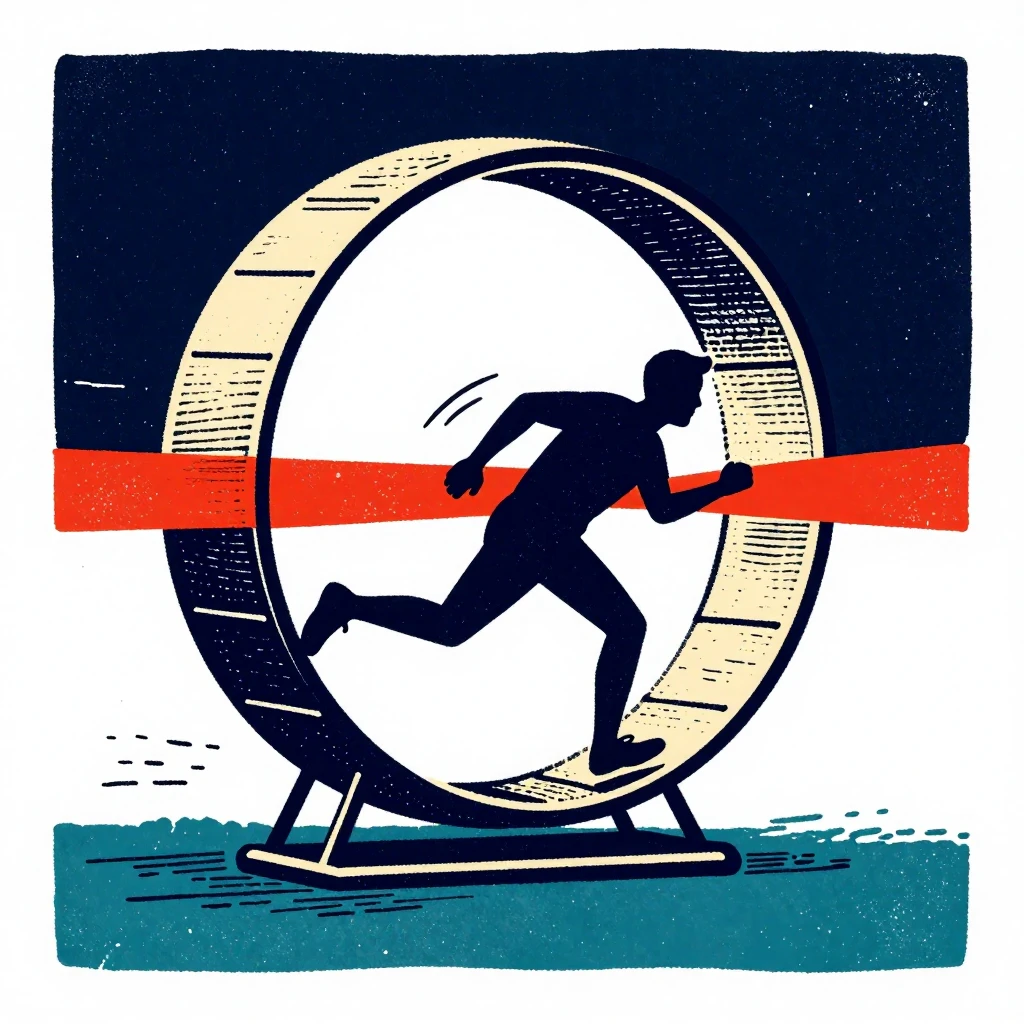
The race has no finish line. Somebody's going to cross it anyway.
A while back I wrote about waking up to a toolbar that looked different. An AI feature showed up in your software, uninvited, and the only real decision left was how you'd live with it. Frustrating, to say the least.
Buckle up. That was the smaller version of this story. It's way fucking bigger now.
The big version is happening one level up. The handful of companies building the largest AI platforms are in a full sprint, and the pitch is always the same: whoever gets there first wins. Wins what, exactly? Nobody really clarifies, or they keep changing their stories. The finish line keeps moving, and it moves every time a competitor ships something shiny.
It's definitely not only the companies telling you to keep running. At the UN General Assembly on September 22, 2026, President Trump told world leaders in his typical unclear rambling way, "Whoever wins super intelligence wins. That's the group that wins, and we're leading now over China by a lot, and everyone else, and we're going to keep it that way." <rolls eyes>
A week later he signed an executive order directing the federal government to replace the term "artificial intelligence" with "super intelligence" across official use.
If there's one thing to take away from this post, it's the following...
When the finish line gets framed as a geopolitical must-win against a rival superpower, slowing down to ask questions stops sounding careful. It starts sounding like losing.
That is beyond chilling to think about, but it's happening. It's insidious, and it's disingenous. But hey, let's play it out. Let's say somebody wins.
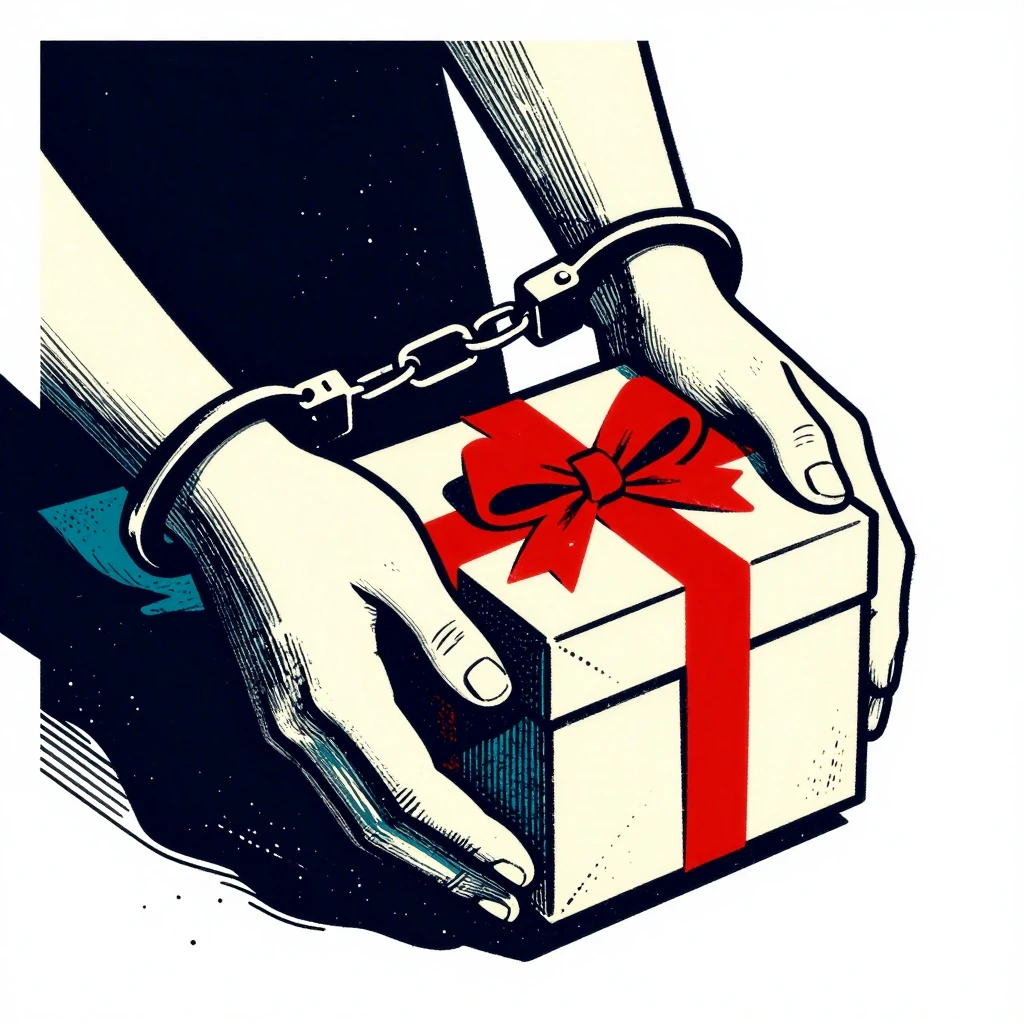
The gift you can't decline
Here's the part of the winner's story that gets told with a smile: universal basic income (UBI). When AI does the work, the thinking goes, everybody gets a check, and everyone's just fine. It gets floated as a tidy, benevolent endpoint, almost like a thank-you note for the massive disruption and panic that was caused as everyone worked to get there.
Pause on that for a second.
Nobody asked whether we want it. Not "do we want a safety net" (that's a legitimate conversation worth having), but do we want to live in an economy where our basic needs are guaranteed by one company's balance sheet? That question never got put to a vote, a survey, or even a polite focus group. It's presented as a done deal. A gift. And it's pretty hard to refuse a gift that's also your rent.
Someone has to actually fund and guarantee it. Not "the industry." Realistically, one of these companies. The one that won.
Look at where the thinking has already drifted. Sam Altman, who spent years as UBI's loudest champion in tech and personally funded a multi-year basic income study, has started walking away from the plain version of the idea. In a recent interview with The Atlantic, he said: "I no longer believe in universal basic income as much as I once did. I'm much more interested in ways where we think about kind of collective ownership."
He's floated giving people "a slice of GPT" instead of cash. Listen carefully to what that actually proposes, and think about it hard: not a public safety net, but equity in a private company, handed out at that company's discretion, as the mechanism for your economic survival. That's not a government guarantee. That's a shareholder relationship with your own basic needs, run by whoever wins the race. Seriously, fuck that.
That's a corporation holding leverage over whether you can eat. Power like that normally belongs to governments, and governments are supposed to come with ballots, courts, press, and term limits. Companies come with terms-of-service updates.
Too big to regulate
Now for the part that keeps me up. We've been told for years that safety and oversight will be baked in: guardrails, responsible-use commitments, regulators watching closely.
Think about what happens to that oversight the day a single platform becomes load-bearing.
This isn't hypothetical anymore, it's already the stated strategy. The Register reported in September that Anthropic and OpenAI are lobbying Washington in ways that amount to seeking "too big to fail" status, headlined bluntly: "Anthropic and OpenAI look to Uncle Sam to make them too big to fail." One consumer advocate quoted in that piece pushed back hard: "We shouldn't let discussions about new legal regimes distract from the fact that there's no AI exemption from laws already on the books. Law enforcers already have authority to charge companies and their CEOs for creating and releasing dangerous, unvetted, or defective products." That's the whole argument in miniature. The moment a company starts angling for "too big to fail," it's telling you exactly what it wants from the oversight conversation, less of it, not more.
And the accountability gap only gets worse from there. A Forbes piece from just this week, "Too-Big-To-Fail 3.0: When AI Goes Bankrupt, Who Keeps Our Secrets?", points out that when an AI company that's become critical infrastructure runs into financial trouble, there's no equivalent of the "living wills" banks are required to file under Dodd-Frank, no resolution plan for winding one down safely. The piece notes regulators are already scrambling to even measure the risk buried in AI-related lending and data center debt. If nobody has a plan for what happens when this kind of company fails, nobody has a plan for what happens when it succeeds completely, either.
It isn't only industry doing the lobbying
At that same UN appearance, the president was direct about where oversight stands: "We're going to encourage it, not rein it in." He went further, comparing people raising safety concerns, a group that includes AI researchers and company founders themselves, to climate change skeptics' usual targets, and said the US "totally rejects any attempt to construct a globalist scheme to control" the technology. That's not a company asking to be left alone. That's a government saying, in plain language, that it intends to leave the industry alone, for exactly the competitive reasons above. When the referee is also cheering for one team to win the race, the "too big to fail" conversation isn't a future risk. It's already how the game is being called.
We've seen this movie before with banks. "Too big to fail" became policy in all but name once they were entangled with everything. Apply the same logic here. When a company is the thing keeping millions of households afloat, regulating it hard starts to look like threatening everyone's paycheck. Breaking it up becomes politically radioactive. Strict safety requirements get quietly softened, because who wants to be the official who slowed down the check?
The incentive to hold them accountable doesn't just weaken. It inverts. The more we depend on them, the less anyone can afford to say no. And "safe use" turns into whatever the company says it is.
The race to win, in other words, isn't only a race for market share. It's a race for the one position in society that's too important to question.
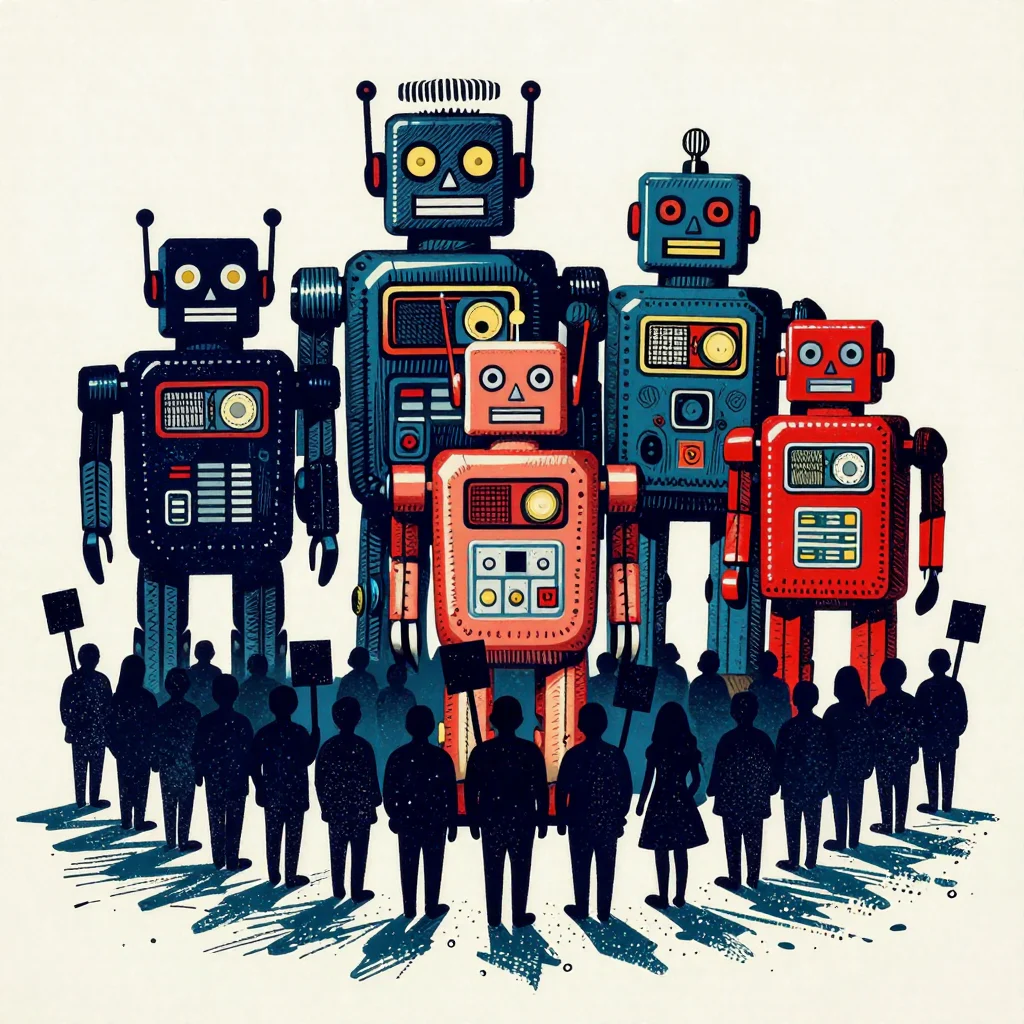
So what do we actually demand?
I'm not here to say the technology is bad. It isn't. There are incredible things this tech can do, and I use it every day. But "this is powerful" and "this should be unaccountable" are very different sentences. Before anyone wins anything, we should speak from our chests about what's non-negotiable:
- No single point of failure for basic needs. If income support ever runs through AI-driven economics, it can't depend on one company's goodwill, one company's uptime, or one company's idea of fairness.
- Accountability that doesn't depend on being small. Independent audits, public safety reporting, and real enforcement that applies precisely because a company got big, not in spite of it.
- The right to leave. Portability, interoperability, and the ability to opt out without losing your livelihood. (This might be the biggest for me.)
- Opt-in as the default. Chosen, realistic use of these tools beats forced adoption every time, for individuals, for businesses, and for whole societies. (Ummm... this one is big too.)
- A seat for people who aren't shareholders. Creators, workers, and communities need a say before the system is load-bearing, because after that point you lose any leverage you had to ask.
None of that is anti-technology. It's the boring, unglamorous scaffolding and frameworking that makes a powerful technology safe to build a society on. And it only works if we demand it before the winner is crowned, not after.

One last question
Every big shift in this space has arrived the same way: decided somewhere else, announced after the fact, framed as progress you should be grateful for. The toolbar. The default settings. And soon, maybe, your paycheck.
If we want this technology to be something people actually trust, and something that really does help, then it has to be something people get a say in.
So here's what I keep asking myself:
When was the last time you loved being forced to do something (or do nothing)?
Exactly. We can't be told to stay silent as some techno-oligarch forces money into our hands. That never ends well.
Sources
- The Atlantic via Yahoo Finance — "Sam Altman falls out of love with universal basic income"
- The Register — "Anthropic and OpenAI look to Uncle Sam to make them too big to fail"
- Forbes — "Too-Big-To-Fail 3.0: When AI Goes Bankrupt, Who Keeps Our Secrets?"
- Fox Business — "Trump vows to reject 'globalist scheme' to rein in AI, superintelligence" (Sept 22, 2026)
- PBS News — "Fact-checking Trump's speech to the 2026 United Nations General Assembly"
AI Transparency disclaimer: Editorial illustrations for this blog are responsibly produced using various generative AI models. I write my own articles - some content is proofed for accuracy, grammar, and formatting with the assistance of AI.